Grease interceptor replacement in Stratford
In September we were called to a plugged grease trap at a commercial kitchen in Stratford. The lid was rusted and seized. Once it was off, we pulled out about three 5-gallon buckets and a full shop vacuum of hardened grease and sludge, and augered the clogged outlet pipe. The interceptor itself had deteriorated, so on 20 and 21 October we came back to replace it.
A grease interceptor is the box in the floor that catches fat, oil and grease from the kitchen drains before they reach the sewer. This one sits beside the counter, under a steel lid.
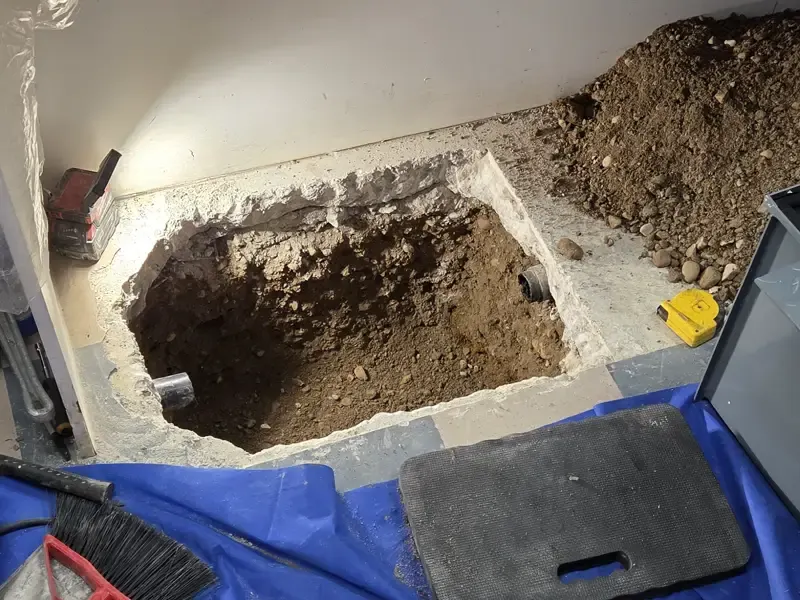
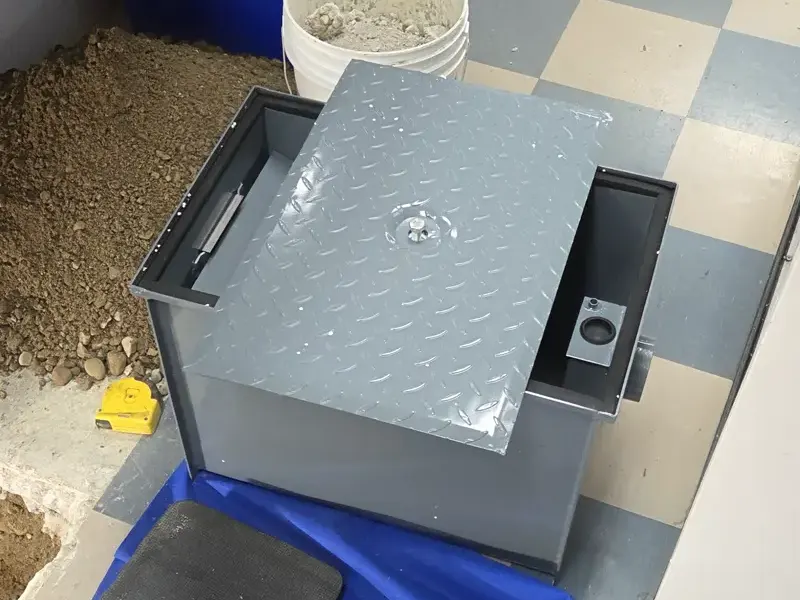
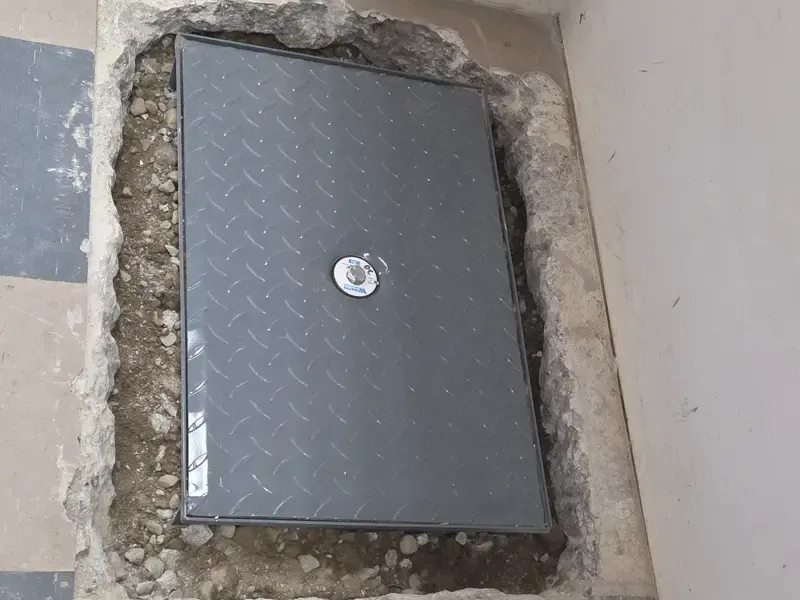
The work order: break out the concrete and dig down to the inlet and outlet pipes. Take the old interceptor out. Pack a gravel base, then set and level a new Watts interceptor of the same size. Reconnect the pipes with approved transition couplings, test for leaks, backfill, and patch the floor with concrete.
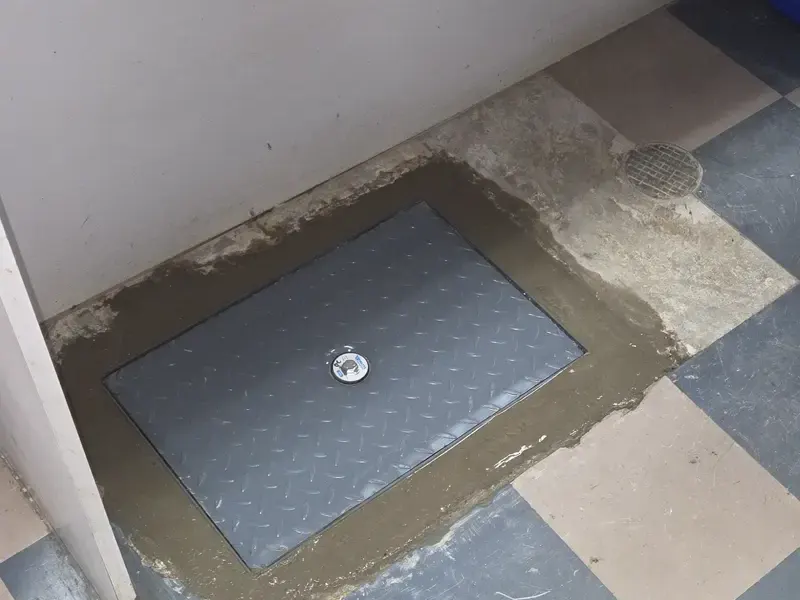
The photos go in order. The hole, with the two pipe ends showing. The new interceptor waiting beside it. The unit set level in the gravel. The floor patched around the new lid.
The patch is a rough concrete finish. Tile or other flooring on top was not part of the job.
Why replace it and not just clean it? Cleaning empties the box. It doesn't fix a box that has worn out. Once the interceptor itself is failing, it has to come out of the floor.
Slow floor drain by the cook line, or a grease smell in the kitchen? Book a trap clean first. If the box is the problem, we'll show you and price the replacement before any concrete is broken.